
Column selection for ion chromatography centers on matching stationary-phase chemistry, capacity, and geometry to analyte charge, sample matrix, detector constraints, and instrument pressure limits. Strong or weak acid/base functional groups set selectivity patterns; capacity balances load and resolution Cation analysis. Particle size and column dimensions affect efficiency, analysis time, and backpressure. Detector and mobile-phase compatibility dictate buffer volatility and additives. Operational factors like lifetime, maintenance, and cost-per-analysis influence choice. Continue for practical guidance and implementation details.
Fundamental Principles of Ion-Exchange Chemistry
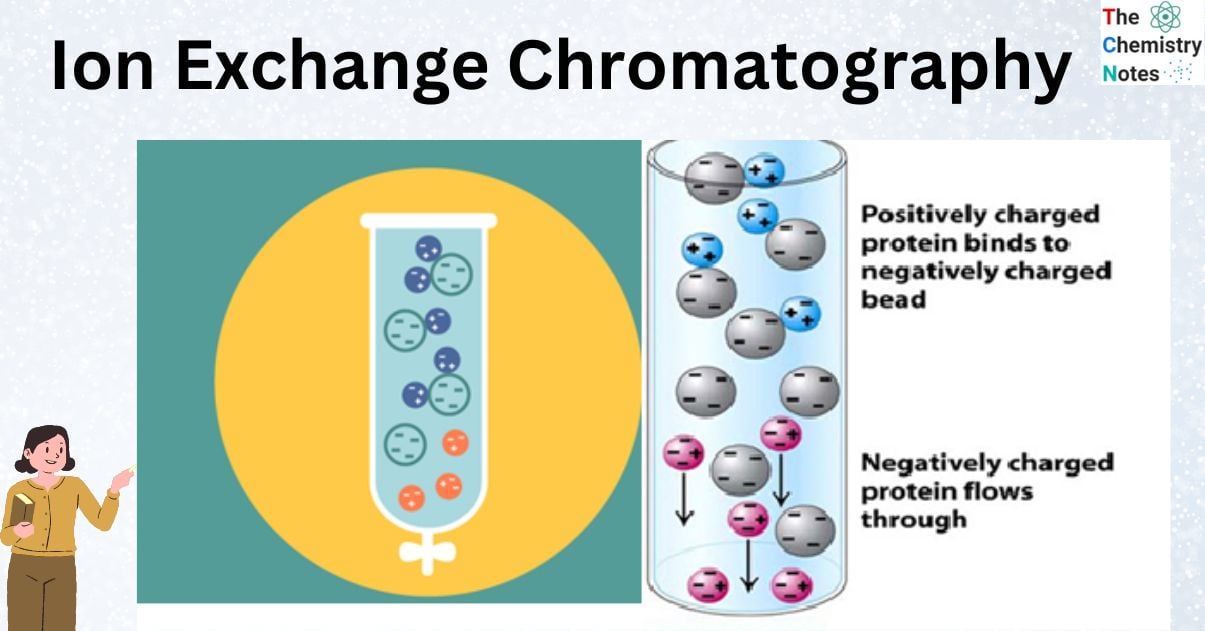
Ion-exchange chemistry rests on reversible electrostatic interactions between charged analytes and oppositely charged functional groups tethered to a stationary phase; selectivity and capacity derive from the strength of these interactions, the ion’s charge and size, and the local ionic environment https://laballiance.com.my/. The mechanism is governed by equilibrium between solution-phase ions and surface sites, modulated by ion pairing basics that describe transient associations with counterions and mobile-phase constituents. Selectivity mechanisms favor ions with higher charge density or complementary steric fit, while competition and shielding by background electrolytes alter retention. Kinetics influence peak shape and resolution; faster exchange yields sharper peaks. Understanding these principles enables deliberate control of retention via mobile-phase composition and ionic strength, granting analysts freedom to tune separation performance without altering column chemistry.
Selecting Stationary Phase: Functional Groups and Capacity
Selecting the stationary phase requires matching functional group chemistry and exchange capacity to target analytes and separation goals. The discussion emphasizes choosing ion-exchange moieties—strong versus weak acids or bases—based on desired selectivity and pH range. Functional groups determine affinity patterns, while capacity controls loading and resolution trade-offs. Consider stationary stability under anticipated eluent strength and pH to guarantee reproducible runtime and extended column life. High-capacity phases suit complex matrices but may require stronger eluents, whereas low-capacity phases enhance sensitivity for trace analytes. Crosslinking and resin backbone influence chemical and mechanical robustness; these factors affect cleaning protocols and solvent compatibility. Practical selection balances selectivity, capacity, and stability to enable flexible method development and analytical freedom.
Column Geometry, Particle Size, and Pressure Considerations
Concerning column geometry, particle size, and pressure, the physical dimensions and packing characteristics of an ion chromatography column directly govern separation efficiency, analysis time, and system stress. Column choice balances throughput, resolution, and instrument limits. Narrow bore columns reduce solvent consumption and sharpen peaks but raise backpressure; superficially porous particles improve mass transfer and maintain efficiency at higher flow rates. Particle size reduction increases plate count yet exponentially increases pressure, constraining options for legacy systems. Practical considerations include:
- Short, wide columns for rugged, low-pressure freedom.
- Long, narrow bore columns for high-resolution, low-solvent use.
- Superficially porous packing to approach sub-2 μm performance without maximal pressure.
- Fine particles only with systems rated for elevated backpressure.
Operators select geometry and particles to match performance goals and pressure capacity.
Detector and Mobile Phase Compatibility
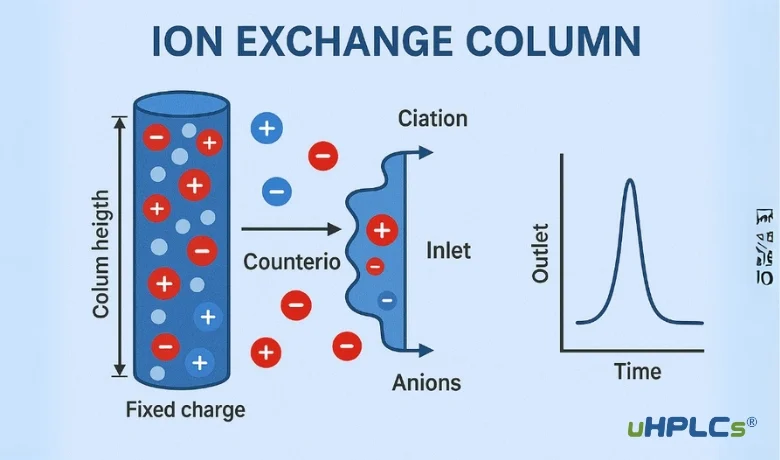
How do detector choices and mobile phase composition interact to determine sensitivity, selectivity, and baseline stability in ion chromatography? The discussion centers on detector chemistry and mobile compatibility: conductivity, suppressed conductivity, UV, and mass spectrometry each demand specific eluents and additives. Conductivity detectors prefer volatile, low-conductance buffers with suppression; UV requires chromophoric or derivatizing agents and clear background absorbance. MS compatibility enforces volatile salts and limits nonvolatile modifiers. pH and ionic strength affect detector response and peak shape, while organic content alters volatility and baseline noise. Column selection must account for these constraints to preserve selectivity and prevent contamination. Thoughtful pairing of detector chemistry and mobile compatibility enables robust, sensitive analyses that grant analysts operational freedom without sacrificing performance.
Operational Factors: Lifetime, Maintenance, and Cost-Per-Analysis
Because routine throughput and long-term reliability directly influence method viability, operational factors such as column lifetime, maintenance frequency, and cost-per-analysis must be planned alongside chromatographic performance. The discussion emphasizes column longevity and serviceability planning to preserve freedom of operation and predictable budgeting. Selection criteria include expected cycle counts, regenerability, and ease of replacement. Preventive maintenance schedules reduce unexpected downtime; documented procedures enable rapid technician action. Considerations balance upfront price against per-run cost, waste disposal, and labor.
- Visualize a column reaching end-of-life after defined injections.
- Picture routine flushes and cartridge swaps on a tight schedule.
- Imagine rapid access to spare columns for minimal interruption.
- Envision predictable per-sample costing for operational autonomy.